Incentives, Permits & Financing
Solar Lease vs. PPA vs. Buying: Which Ownership Model Fits Your Home?
How solar leases, power purchase agreements and ownership differ in cost, risk, tax treatment and home sales, with a 25-year cost example and contract clauses to read.
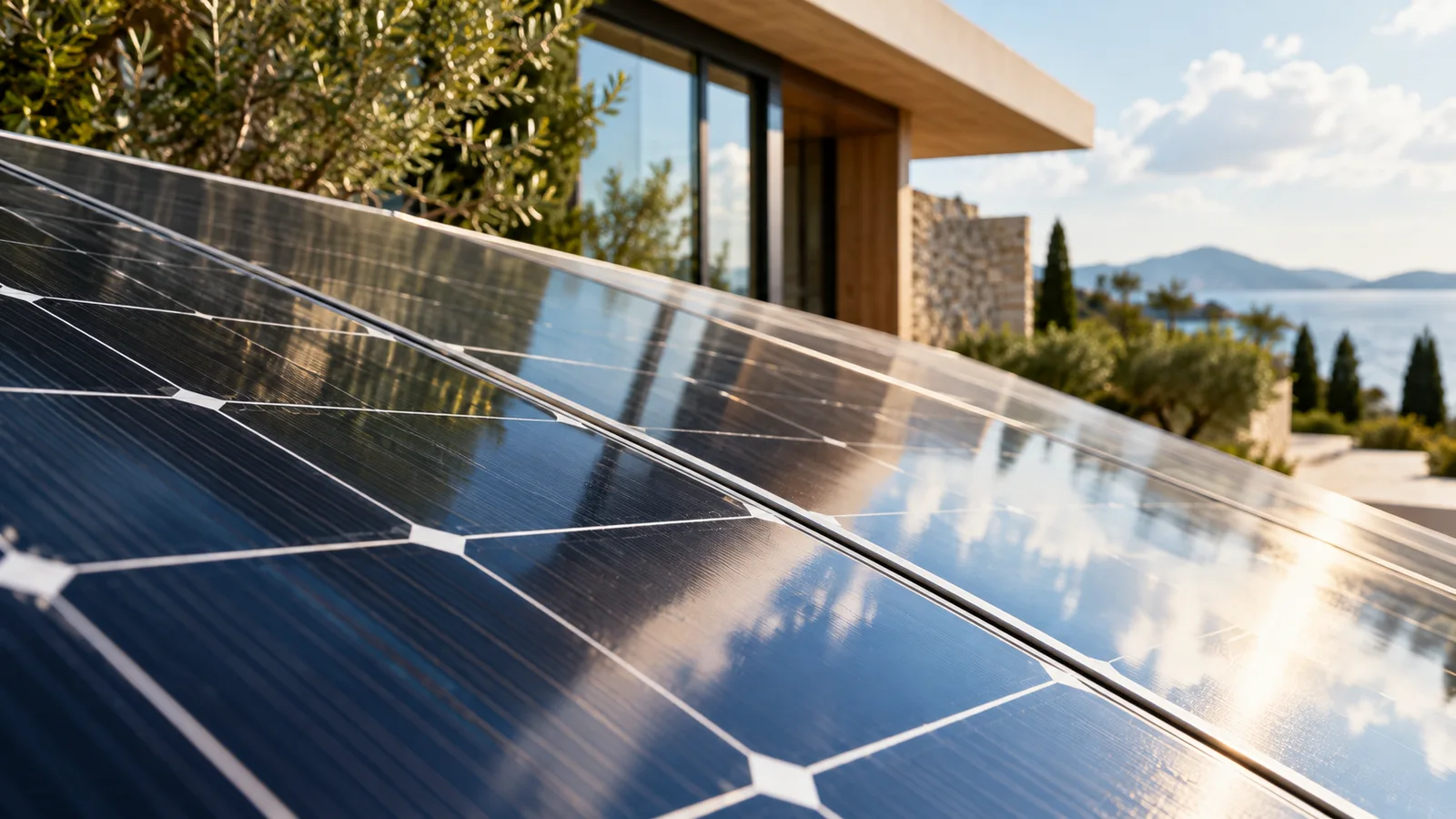
Buying a solar system usually costs the least over its lifetime and gives you control, while a lease or PPA lowers the upfront cost and shifts maintenance to the company in exchange for less total savings and added contract complexity. The deciding factors are how long you will stay in the home, whether you can afford or finance the purchase, your appetite for contract obligations and who can claim any tax benefit. This guide explains each model, gives a 25-year cost comparison and lists the clauses most likely to cause trouble.
All figures are illustrative and not offers. Read each contract carefully before signing.
The three models
Buying (cash or loan)
You own the system. You receive the electricity savings and any incentives you qualify for, and you are responsible for maintenance and insurance. The system typically adds to your home's equipment and can transfer with the house.
Solar lease
A company owns the system on your roof and you pay a fixed monthly fee for its use, whatever the system produces. Some leases include an annual escalator that raises the payment, commonly in the low single-digit percentages.
Power purchase agreement (PPA)
A company owns the system and you pay a rate per kWh for the energy it produces. Your bill varies with production, and the rate may escalate annually.
Side-by-side comparison
| Feature | Buy | Lease | PPA |
|---|---|---|---|
| Upfront cost | Cash or loan down payment | Often little or none | Often little or none |
| Who owns the system | You | Company | Company |
| Maintenance | You (under warranties) | Company, per contract | Company, per contract |
| Federal tax benefits to you | Depends on law in effect at purchase | Generally none directly | Generally none directly |
| Payment basis | Loan payment or none | Fixed monthly fee | Per-kWh rate |
| Escalator risk | None | Possible | Possible |
| Selling your home | System transfers; may add value | Buyer must assume or you buy out | Buyer must assume or you buy out |
| Total lifetime savings | Typically highest | Lower | Lower |
A 25-year cost example
Illustrative numbers only.
Scenario. Without solar, you would pay $2,160 a year for electricity (10,800 kWh at 20 cents), rising 3% annually.
- Buy for cash: $24,000 upfront. Suppose the system offsets 90% of usage, saving $1,944 in year 1, growing 3% a year. Over 25 years, savings are 1,944 x 36.46 = about $70,880 (36.46 is the future-value factor for 25 years of 3% growth). Net gain before maintenance = 70,880 - 24,000 = about $46,880.
- Lease at $140 a month ($1,680 a year) with a 2.5% escalator: total payments over 25 years = 1,680 x 34.16 = about $57,390 (factor for 2.5% over 25 years). Savings = $70,880, so the net gain is 70,880 - 57,390 = about $13,490, with no ownership at the end.
- PPA at 14 cents per kWh with 2.5% escalator: year-1 cost = 9,720 kWh x 0.14 = $1,361, total over 25 years = 1,361 x 34.16 = about $46,490, so net gain is about $24,390.
The numbers are made up to show a method, and your real result depends on the contract terms and your electricity prices. Compare using the same horizon and escalators, then use the payback calculator for the purchase scenario.
Tax treatment
Historically, a homeowner who bought a system could claim the federal residential credit, while the company that owned a leased system claimed a business credit and passed some savings on in pricing. Legislation in 2025 ended the homeowner credit for expenditures after 2025 and changed business credit rules for some residential arrangements. See the federal tax credit guide. Because the rules are technical and may have deadlines, ask the company to explain in writing how current law affects your price and what happens if its tax benefit changes.
Contract clauses to read
- Term and renewal. Terms often run 20 to 25 years. What happens at the end: renewal, buyout, removal?
- Escalator. How much and how often does the rate increase? Compare the total under the escalator, not just the first-year payment.
- Production guarantee. Does the company guarantee a minimum output, and what is the remedy?
- Transfer and sale. Can the buyer assume the contract? Who pays fees? Is there a buyout formula?
- Liens and filings. Many companies file a UCC fixture filing on the property. Understand how this could affect refinancing or sale.
- Roof and damage responsibility. Who pays if the roof needs work that requires removing panels?
- Insurance. Who insures the system and what must you carry?
- Default and early termination. What fees apply if you cancel?
- Monitoring and maintenance. What is included, and what response times are promised?
Selling a home with a lease or PPA
Buyers and mortgage lenders must accept the transfer, and some buyers decline. Plan to ask your realtor and the company early. Some contracts allow buyouts at a formula price that may not match the system's market value. If you own the system, appraisers may or may not add value, so consult your real estate agent.
Mistakes to avoid
- Comparing only the first-year payment.
- Ignoring escalators and renewal terms.
- Assuming a lease means no responsibilities, such as roof repair, insurance and damage.
- Signing in a rush because of a limited-time offer.
- Not asking how a change in tax law affects your agreement.
When to consult a professional
For leases and PPAs, a real estate attorney can review the contract and any property filings. A tax adviser can explain how the structure affects your return.
Frequently asked questions
Is a lease or PPA a good idea?
It can fit homeowners who want solar with no upfront cost and minimal responsibility, but total savings are usually lower than buying. Evaluate the escalator and transfer terms carefully.
Can I buy out a lease early?
Many contracts allow it at a price set by a formula. Request the buyout schedule before signing.
Who maintains a leased system?
Usually the company, per the agreement. Verify who handles repairs, monitoring and panel removal for roof work.
Does a PPA affect my ability to refinance?
It can, because of filings on the property. Ask your lender and the company before signing.
Sources
- Federal Trade Commission — consumer protection guidance for solar contracts
- Consumer Financial Protection Bureau — financing and mortgage information
- U.S. Department of Energy — overview of solar ownership options
- Internal Revenue Service — tax treatment of energy property